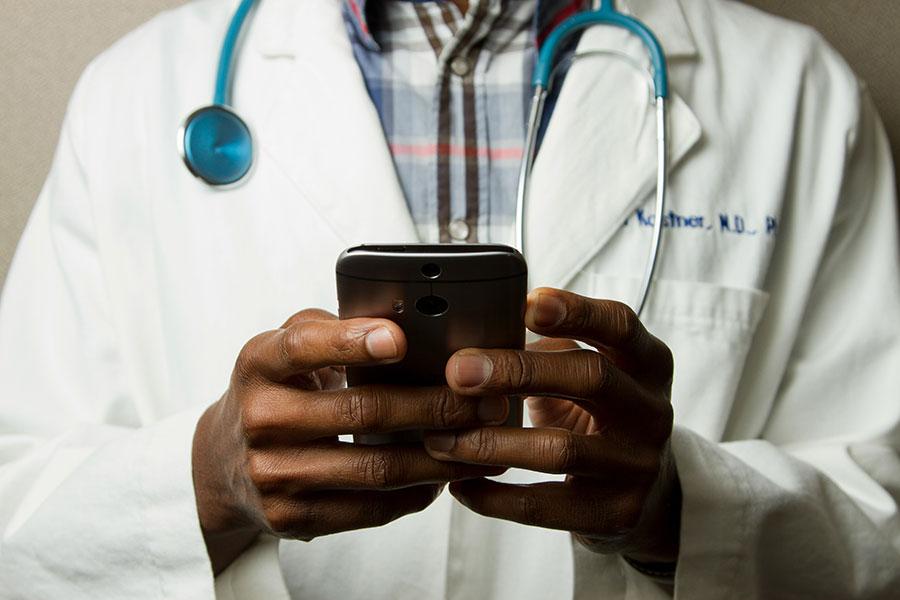
David Sarabia has built healthcare tech for over a decade. As a result, he has spent enough time inside hospitals to see the same pattern everywhere. Clinicians were surrounded by digital systems, yet the most important thinking happened outside them. During rounds in a Brooklyn ICU, he watched a neurologist scroll through pages of unstructured notes just to confirm which medication a nurse had administered. At one point the physician said, almost in passing, “we communicate through this thing.”
For Sarabia, that sentence revealed the real issue. Electronic health records (EHRs) were never designed as communication tools. They were built for billing. Every workflow reflected that origin, while the most valuable clinical reasoning happened in conversations, case discussions, and the mental models physicians used to make decisions. None of it was captured or supported.
Sarabia knew he wanted a GraphQL data layer but didn’t want to hand-code integrations across a dozen legacy medical and research systems. He needed a foundation that let him move fast and stay focused on the clinician experience instead of writing manual API integrations. That decision set the direction for ClinicaMind’s core vision: building AI-powered digital twins that help clinicians think, collaborate, and complete work without navigating multiple systems.

The Challenge: Fragmented Systems and Rising Clinical Burden
Sarabia’s founding advisor, Dr. Julio Vega, is a neurologist at UCSF. His days followed a familiar pattern in healthcare: fourteen to sixteen hours at the hospital followed by another two to three hours of documentation at home. Case summaries, medication reviews, lab follow-ups, and surgical prep all happened across disconnected systems that were never designed to work together.
“Healthcare data is incredibly siloed,” Sarabia explains. “EHRs, labs, psychiatric notes, imaging, insurance data, research databases. Nothing connects cleanly.”
Even requesting a patient’s medical record from another hospital required faxing paper forms and calling medical records departments repeatedly until someone confirmed they had received the request. For physicians relying on outdated, inflexible software created constant frustration and burnout.
It was clear that any solution would need to bridge these gaps. ClinicaMind needed a foundation that could retrieve clinical data safely in real time, support natural conversation, meet strict compliance requirements, and be ready to evolve quickly as new AI models emerged.
How Apollo Enabled ClinicaMind to Go From Hackathon Prototype to Production in Weeks
At a Y-Combinator hackathon, Sarabia decided to test whether an AI assistant could help Julio with end-of-day case reviews. Apollo MCP Server, released just days earlier, made it simple to connect the structured clinical data the assistant would need.
In four hours, he built a working prototype. It connected to legacy medical systems, clinical research sources, and EHRs, and delivered structured data to the digital twin through Apollo MCP. After a long shift, Julio could sit in his car and, within minutes, speak naturally with an assistant that surfaced key cases, pulled information from multiple systems, and synthesized more than one hundred research papers for complex decisions.

What stood out was how quickly the prototype became production-ready. With minimal cleanup, the hackathon build became the basis of the product. ClinicaMind onboarded real clinical users within weeks and started generating recurring revenue during that same period, proving the concept worked before most startups finish their first sprint.
ClinicaMind onboarded real clinical users in weeks. During that same period, the company generated a hundred thousand dollars in recurring revenue, and after onboarding its first five customers, it was nearing two hundred thousand dollars in ARR.
“In healthcare, going live in weeks is almost unheard of. Apollo gave us the foundation to do that safely.” – David Sarabia, Founder and CEO of ClinicaMind
The Results: Early Impact for Clinicians and the Business
ClinicaMind is already demonstrating how much value clinicians gain when technology reduces friction instead of adding to it.
Key outcomes include:
- 4-hour prototype taken to production within weeks
- Began generating revenue faster than most early-stage startups ship their first release
- 1 unified workflow replacing multiple EHRs and unstructured notes
Clinicians immediately recognize when something is built for the way they actually practice. Adoption has come quickly, and the demand continues to grow.

“Apollo lets us feed the AI exactly what it needs, without unnecessary data or overhead. It is structured, secure, and low latency. The same foundation we use for our UI now powers our conversational AI.” – David Sarabia, Founder and CEO of ClinicaMind
Building for an AI-Native Future
As ClinicaMind grows, the team remains focused on supporting clinicians rather than replacing them. The platform uses graph neural networks to map clinical relationships, narrow models tuned to specific specialties, and on-device inference for privacy-sensitive tasks. Apollo sits at the center, giving the team a foundation that can evolve as new models and workflows emerge.
For ClinicaMind, the goal is simple: give clinicians software that supports the way they actually work. As the team expands into new specialties and deeper automation, Apollo provides the foundation that lets them build quickly, safely, and with intention.
“I have built companies on Apollo,” Sarabia says. “I know what it gives me: the ability to move fast without compromising on security or reliability. Our digital twin runs on top of it today. As we expand into more specialties and more automation, Apollo is what allows us to scale.”
Want to learn more? David Sarabia shared additional insights about ClinicaMind’s digital twin and early rollout during his session at GraphQL Summit 2025.
Next story
Share article